Let's analyse certain major Linux distros and their anticipated purpose:
1) Ubuntu: Ubuntu was once considered as the standard Linux distribution for beginners, but due to Ubuntu Unity, that title no longer belongs to Ubuntu, but that doesn’t mean it is useless. Very soon, Ubuntu is likely to emerge with the first trustworthy Linux tablet
2) Linux Mint: This is the effective standard for beginners. Linux Mint introduced great and user friendly features in Ubuntu and enhanced GNOME 3- a combination that provided an incredible environment for beginners as well as old users of Linux.
3) Fedora: If you want an advanced version of Linux, go for Fedora. Even those, looking for pure take on GNOME 3, opt for Fedora.
4) Debian: Debian is for you, especially if you’re aiming at a good development environment. It's the distro Ubuntu was based upon and certainly a solid flavor of Linux. It’s easy to manage too due to its apt package management system.
5) Puppy Linux: This small Linux distro is used with a low-powered machine or address a specific purpose such as running VirtualBox virtual machines, network scanning, or hard disk rescue.
6) openSUSE: It’s a tough one with KDE and solid system admin tool. Opt for this one, if ytou are looking for multi-lingual support.
7) CentOS: If you are looking for the significant power of enterprise Linux but without paying for Red Hat Linux, you can go for CentOS. It can handle, mail servers, web servers, DNS, DHCP, and so on.
8) Red Hat Linux: This is the distribution for enterprise and corporate environments. Not only this, this is the first Linux company that made a serious profit. With Red Hat Linux , you get good amount of support and some proprietary software to make the task of managing server/network/environment much easier.
9) Gentoo: Gentoo is an OS that comprises several packages as Debian do. Though it doesn’t comes in pre-compiled type, but you need to compile every-time for every system. It is ideal for learning and to know internal working of a Linux OS.
10) Damn Vulnerable Linux: Vulnerable Linux (DVL) is intentionally packed with broken, ill-configured, obsolete, and usable software that makes it susceptible to attacks. This is meant for training Linux Admins.
11) Arch Linux: Arch is a systematic release OS, where one time installation is enough and you can upgrade a distro with a new version without going for fresh install. Arch is created to be kept simple from Developer’s point of view enables you to understand every detail of a Linux System.
12) Kali Linux: Kali Linux is based on Debian and enables penetration testing. Recently released, its predecessor was Backtrack. Kali is available with various penetration tools, be it Wi-Fi or Database or any other tools. Kali makes use of APT for Package Management.
Jumaat, 22 November 2013

Rabu, 20 November 2013
Is Islam a Brutal Religion?
Name of Questioner: Lubna 2013/11/19
An ex-friend of mine who is a Hindu has suddenly turned a vicious critic of Islam. He declares Islam a brutal religion and my pleadings not to disrespect Islam are given a deaf ear. He asked me a couple of questions I have no answer to. Kindly help me answer them. His charges are about beheading, stoning, (verses 9:29, 5:32) and pedophilia, Shia killing Sunni and Sunni killing Shia! He asks: What are you proud of? Pakistan church bombing? Or Nairobi mall killing? Or Syria killings or daily attacks on minorities in Iraq, Iran, Yemen! Or 97% of females in Africa being genitally mutilated so that they won't stray, even passing urine is excruciatingly painful let alone menstruation! Please Google and open your mind and argue with hard liners for your rights! Muslim women in Africa! When was the last time someone won a Nobel Prize for say medicine? Or Physics? Zilch! Who carried out the latest suicide bombing?
Answer:
Salam dear sister,
Thank you for your questions and for contacting Ask About Islam.
In this answer I address the original questioner and so you may pass it on to him.
After Sept 11, 2001 the world media unleashed an aggressive world -wide propaganda against Islam and Muslims. The WTC attacks perpetrated by “Al-Qaeda” (according to the official version) was attributed to Islam and Muslims in general; and the supposition was that all Muslims are in some way guilty of that deed.
Thereafter any aberration of Muslims anywhere was twisted and bloated out of all proportion in the media. Several violent incidents where no Muslim was involved were attributed to “Islamic terrorism.” Add to this the general tendency of the media to pander to the reigning passions of the people by hype and spin. Seeing that there is now a new climate of Islamophobia, they imputed almost every horrific event in the world to “Islamic terror” and went on projecting on the world screen a most horrible picture of Islam.
All the same a horrible event like for instance the torture and genocide (and gendercide) in 1995 by Serbs of about 8000 Bosnian Muslim men of the town of Srebrenica, which was under the UN peace keepers (who conveniently looked away at the critical time) was not even reported. It was David Rhode, a brave journalist of the Christian Science Monitor who unearthed the whole event and brought the tragedy before the world’s attention in 1996. But on Sept 11, time stood still and history took a turn: Western media replaced Communism with Islam as the Enemy of “the civilized world”. And horrendous stories such as the ones cited in the question follow one after another in the media.
Let us now see what your charges are: The harsh punishments you have mentioned are meant only for the hardened criminals who repeatedly commit the crimes. In different penal codes different modes of death penalty are adopted.
In ancient times, sawing, flaying and boiling were used as methods of execution. Shooting by a firing squad, lethal injection, the gas chamber, the electric chair and hanging are some of the methods adopted by modern countries. In Saudi Arabia execution is by beheading. Whatever be the method, the one to be executed is made to taste the pain of death.
In modern times we hear some people arguing for the elimination of the death penalty. In India, the criminal who is convicted of rape is not given the death penalty; but recently after gang rape became a somewhat usual phenomenon in India, thousands of people rallied in the capital city clamoring for the introduction of death penalty for rape too. Those who argue for the elimination of death penalty have more mercy for the criminal than for the victim.
Consider beheading as a method of execution: It is to be done with a very sharp sword at one fell swoop. It causes less pain than hanging or electrocution or shooting, as the person’s life vein at neck is cut asunder in a split second. Other methods of execution are far more harrowing and cause longer suffering before the victim finally succumbs.
Stoning an adulterer or adulteress was practiced by the Jews of ancient time. In the early history of Islam we see such a punishment was meted out to one person; and this was not surprising as the Shari’a had the same origin as the Mosaic Law. But the Quran (which Muslims believe to be the Word of God) does not mention stoning as a method of punishment.
You have referred to the Quranic verse:
{[And] fight against those who - despite having been vouchsafed revelation [aforetime] -do not [truly] believe either in God or the Last Day, and do not consider forbidden that which God and His Apostle have forbidden, and do not follow the religion of truth [which God has enjoined upon them] till they [agree to] pay the exemption tax with a willing hand, after having been humbled [in war].} (Quran 9:29)
After the first thirteen years of the Prophet’s mission in Makkah, where he was subjected to the most brutal persecution, he and his followers were driven out of their homes and had to seek asylum in Madinah; or else, they would all have been massacred.
In Madinah the Muslims were received very honorably by the people, and eventually the Prophet (peace be upon him) was accepted as a leader of the communities there. Hearing of this, the Makkans feared a campaign from Madinah to revenge on them. The Makkans then got ready to eliminate Muhammad and Islam by marching towards Madinah with a well-equipped army. It was in this context that permission was given the Prophet to fight. It is worthy of note here that the permission was for self-defense, as well as to safeguard the Muslims’ right to live as Muslims. The Muslims were only a band of 313 persons who had very little war equipment by the standards of the time; but in the battle that followed they defeated a well-equipped army of a thousand fighters from Makkah. This was a war between the forces of Truth and Falsehood; and Truth won.
After this battle, the Makkans waged many battles with the Muslims. But in the meantime, the Prophet was able to form a society and a government in Madinah. It was a truly Islamic government which had to make provisions for those who had not become Muslims. Those who did not become Muslims were not compelled to become Muslims; but they had to obey the laws of the government. The Muslims had to pay the zakah, a tax paid to the government; also they had to engage in military service, in case of a defensive battle. The non-Muslims were exempted from all this, but were asked to pay a tax, which was called jizya. This was in lieu of compulsory military service as well as zakah, both of which were incumbent on Muslims.
Later this became a most misunderstood tax, as though a grievous injustice was done to the non-Muslims. But if the non-Muslims were exempted from any tax, it would be unfair to the Muslims, since all were citizens of the same country. The two kinds of taxes were known by two different names; and it was easy for later critics to highlight the name jizya and say that the non-Muslims were treated unfairly.
The rest of your answer will be posted tomorrow insha'Allah.
Salam.
Selasa, 19 November 2013
Quantum physics proves that there IS an afterlife, claims scientist
 |
| Professor Robert Lanza's, pictured, theory is explained in his book Biocentrism: How Life and Consciousness are the Keys to Understanding the True Nature of the Universe |
Debate regarding religion and spirituality has caused more discord than any other topic throughout history. While belief in synchronistic design has helped some reach unimaginable heights, others outright reject the notion of a supreme being – or an eternal life.
From a scientific aspect, many prefer to suppose the notion of an after-life either ridiculous – or at least improbable.
However, one expert claims the proof of life beyond the grave lies in Quantum Physics. Professor Robert Lanza believes the theory of biocentrism teaches that death as we know it is an illusion created by our consciousness.
A variety of spiritual texts teach that ‘existence’ on this plane is an experience of the limit-less, immortal soul. However, faith in the unknown has been the foundation which has molded spiritual tradition, not science. The professor’s findings may change this.
“We think life is just the activity of carbon and an admixture of molecules – we live a while and then rot in the ground,” said Lanza on his website.
A graduate of Wake Forest University School of Medicine in North Carolina, the Professor continued, “As humans we believe in death because ‘we’ve been taught we die’, or more specifically, our consciousness associates life with bodies and we know that bodies die.”
The scientist’s entire theory explains how death may not be as terminal as commonly thought. Biocentrism is classed as the theory of everything and comes from the Greek, meaning ‘life center’.
Biocentrism, then, is the belief that life and biology are central to reality and that life created the universe, not the other way around. This suggests a person’s consciousness determines the shape and size of objects in the universe.
Lanza’s theory uses the example of the way all people perceive the world around them. A person sees a blue sky, and is told that the color they are seeing is blue, but the cells in a person’s brain could be changed to make the sky look green or red.
LANZA'S THEORY OF BIOCENTRISM AND THE AFTERLIFE
Biocentrism is classed as the Theory of Everything and comes from the Greek for 'life centre'. It is the belief that life and biology are central to reality and that life creates the universe, not the other way round.
Lanza uses the example of the way we perceive the world around us.
A person sees a blue sky, and is told that the colour they are seeing is blue, but the cells in a person's brain could be changed to make the sky look green or red.
Our consciousness makes sense of the world, and can be altered to change this interpretation.
 |
By looking at the universe from a biocentric's point of view, this also means space and time don't behave in the hard and fast ways our consciousness tell us it does.
In summary, space and time are 'simply tools of our mind.'
Once this theory about space and time being mental constructs is accepted, it means death and the idea of immortality exist in a world without spatial or linear boundaries.
Theoretical physicists believe that there is infinite number of universes with different variations of people, and situations taking place, simultaneously.
Lanza added that everything which can possibly happen is occurring at some point across these multiverses and this means death can't exist in 'any real sense' either.
Lanza, instead, said that when we die our life becomes a 'perennial flower that returns to bloom in the multiverse.'
|
***
Simply stated: “What you see could not be present without your consciousness,” explained Robert. “Our consciousness makes sense of the world.”
This means that by looking at the universe from a biocentric point of view, space and time don’t behave in the hard and fast ways our consciousness tell us it does. According to the professor, “Space and time are simply ‘tools of the mind”.
Once this theory about space and time being mental constructs is accepted, it means death and the idea of immortality exists in a world without spatial or linear boundaries.
Interesting to note, in accordance with the scientist’s work, theoretical physicists believe there is an infinite number of universes with different variations of people, and situations, taking place simultaneously.
 |
| Lanza cites the double-slit test, pictured, to backup his claims. When scientists watch a particle pass through two slits, the particle goes through one slit or the other. If a person doesn't watch it, it acts like a wave and can go through both slits simultaneously. This means its behaviour changes based on a person's perception |
***
Enthusiastic about the truths of his studies, the Professor added that “everything which can possibly happen is occurring at some point across these multiverses and this means death can’t exist in ‘any real sense’ either.”
Instead, when one dies their life becomes a ‘perennial flower’ that returns to bloom in the multiverse. Lanza shared “Life is an adventure that transcends our ordinary linear way of thinking. When we die, we do so not in the random billiard-ball-matrix but in the inescapable-life-matrix.”
To prove his theories, the famous double-slit experiment was cited to back up his claims. In the experiment, when scientists watch a particle pass through two slits in a barrier, the particle behaves like a bullet and goes through one slit or the other.
Yet if a person doesn’t watch the particle, it acts like a wave. This means it can go through both slits at the same time.
This demonstrates that matter and energy can display characteristics of both waves and particles, and that behavior of the particle changes based on a person’s perception and consciousness.
As the collective consciousness shifts into better understanding of the universe and the self, it can only be hoped scientific studies will continue to validate what spiritual teachings have long since acknowledged as truth.
HOW THE DOUBLE-SLIT EXPERIMENT SUPPORTS LANZA'S THEORY
In the experiment, when scientists watch a particle pass through two slits in a barrier, the particle behaves like a bullet and goes through one slit or the other.
Yet if a person doesn't watch the particle, it acts like a wave.
This means it can go through both slits at the same time.
This demonstrates that matter and energy can display characteristics of both waves and particles, and that the behaviour of the particle changes based on a person's perception and consciousness.
Professor Robert Lanza’s full theory is explained in his book “Biocentrism: How Life and Consciousness are the Keys to Understanding the True Nature of the Universe.”
Isnin, 18 November 2013
You are using Linux, say that proudly!
Linux being just limited to personal computers is a thing of past. How about the most powerful things of the world sharing your operating system? Yes, Linux is growing and how! We bring to you 9 awesome technologies running on Linux!
9. The Most Powerful Supercomputers Today Run Linux!
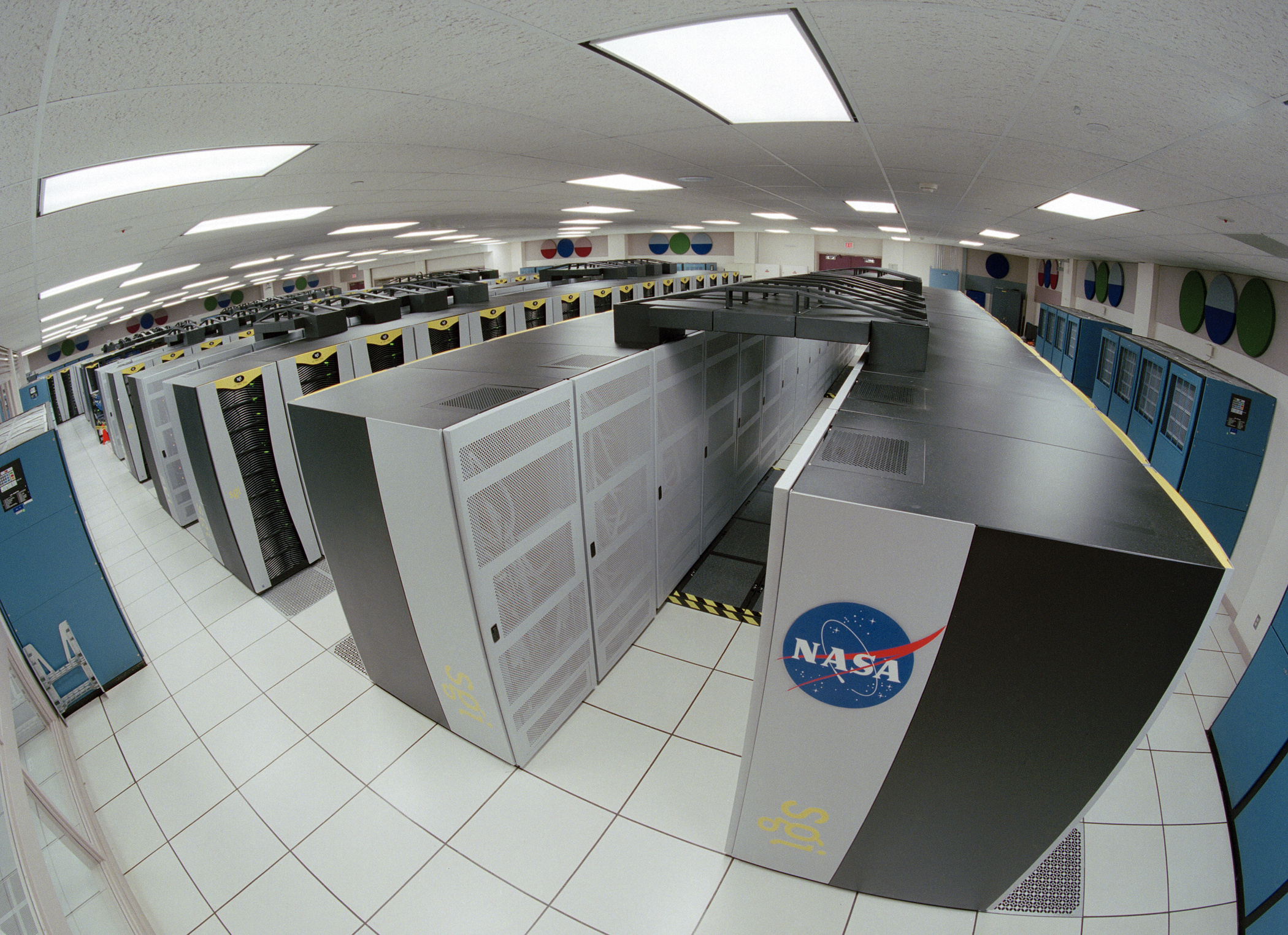
Yes you might know about this one as we wrote a story about this fact titled Here Are The 10 Most Powerful Supercomputers And They All Run Linux!. And if the talk about the top 500 fastest supercomputers, 90 per cent of them run on some variant of Linux.
8. Linux Powers Japan's Bullet Trains

We all know about the Shinkansen, (popularly known as Bullet Train), which is the network of high-speed railway lines in Japan. The trains are famous for their super fast speeds of 240–320 km/h. The Shinkansen uses an Automatic Train Control (ATC) system to eliminate the requirement of the trackside signals. Additionally, it uses the Automatic Train Protection system which is a centralized traffic control that networks and computerizes all tasks related to train movements, tracks, stations and schedules. And yes, most of these systems are powered by Linux.
7. High-Tech Road Traffic Control Running On Linux!

How about high-tech traffic control system, which can read and influence the rate of traffic flow, read the time intervals of outgoing and incoming network traffic that can help in making complex network traffic policies and shape the mechanism using a variety of algorithms. Sounds like a super technology? As per Funtoo's report, San Francisco has recently started to use such traffic controllers and yes they are powered by Linux.
6. In-Vehicle-Infotainment And Communications Systems Of Toyota Runs Linux

The In-Vehicle-infotainment (IVI) systems which are used in automobiles is the latest trend in the auto industry which delivers entertainment and information content to the travellers. Although every IVI system has different features, the basic functions these devices perform are managing and playing audio content, utilizing navigation for driving, delivering entertainment to the rear seater like movies, games, social networking, reading out incoming and sending outgoing SMS text messages, making phone calls, and providing access to the network-enabled content like traffic conditions, sports scores and weather forecasts.
And one of the largest automobile manufacturers, Toyota is using Linux as the base platform for its IVI technologies! Aren't you proud?
5. Linux Powers The New York Stock Exchange

One of the fastest moving businesses of trading stocks, bonds and derivatives, the world of financial exchanges are becoming Linux friendly. Yes, the largest exchange of the world, the New York Stock Exchange (NYSE) has replaced their Unix based systems with Linux. The systems can generate 1,500,000 quotes and process 250,000 orders every second together with producing acknowledgments of every transaction within two milliseconds. Go Linux!
4. Linux Helping In Power Particle Physics Research

CERN, the largest particle physics laboratory of the world trusts upon our beloved Linux to control its huge particle accelerator. The laboratory makes use of Scientific Linux (SL), the Linux distro produced by Fermi National Accelerator Laboratory and the European Organization for Nuclear Research (CERN). Scientific Linux like any other Linux distro is free and open sourced and is based on Red Hat Enterprise Linux.
3. Linux On Air Traffic Control Systems

The FAA's (Federal Aviation Administration) Common ARTS software of the United States has been moved to Linux. The air traffic control computer system, Common ARTS (or Automated Radar Terminal System), is used to track aircrafts. It automates the air traffic controllers job by synchronizing various radar and human inputs. Most of the TRACONs around U.S. are using this system.
2. Nuclear Submarines Running On Linux

The U.S. Department of Defense is using Linux in many of its technologies and the U.S. Army is “the” single largest install base for Red Hat Linux. But the most amazing amongst all of these is the nuclear submarine fleet of US Navy which is powered by Linux. This nuclear submarine was delivered by Lockheed Martin to the US government in 2004, and it is powered by Red Hat Linux.
1. The Four Web Bigshots, Google, Amazon, Twitter and Facebook; They All Use Linux!

The largest search giant Google, the biggest social networking sites Facebook and Twitter, and the most popular e-merchant Amazon they all share your OS, Linux, for various web and cloud services!
So next time you tell some one that you are using Linux, say that proudly!
Incredible Health Benefits of Eating Chillies

The main component in chillies is a chemical called Capsaicin, which is responsible for the intense heat sensation. Capsaicin lowers blood sugar levels, improves heart health, boost circulation and protects against strokes. Eating chillies can have a very positive impact on people who are overweight or suffer from diabetes because they reduce the insulin levels. Known as circulation boosters, chillies can have a major impact on your health by boosting circulation and also act as a blood thinner to help protect against strokes.
Important! Frequent consumption of fresh chillies may cause stomach problems. Dry chillies don’t have the same effect. They still do contain capsaicin but don’t harm your stomach.
Stabilising blood sugar levels – after eating a meal containing chillies diabetics need 60% less insulin to return there blood sugar levels to normal.
Reducing inflammation – chillies contain a substance known as capsaicin , this Neuropeptide has a strong anti-inflammatory effect on the body.
Heart health – Studies show that eating chilli regularly helps keep your heart healthy by lowering cholesterol, keeping your blood pressure in a healthy range, and allowing more blood to reach the heart.
Maintain bone health – Researchers have found that chilli peppers contain high amounts of calcium, which is important in maintaining strong bones and teeth.
Pain relief – Chillies stimulate the release of endorphins that are natural pain killers. It relieves pain caused due to shingles (Herpes Zoster), bursitis, diabetic neuropathy and muscle spasm in shoulders, and extremities. It also helps in relieving arthritic pains in the extremities.
Clears congestion – Chilies gives relief from nasal congestion by increasing the metabolism. It also dilates airway of lungs which reduces asthma and wheezing. It relieves chronic congestion in people who are heavy drinkers.
Lowers risk of some cancers – It has been noted that vitamin C, beta-carotene and folic acid found in chilli reduces the risk of colon cancer. Chillies such as red pepper have cartonoid lycopene, which prevents cancer disease.
Chillies Help to Burn Fat - Capsaicin is also a thermogenic compound, and increases the metabolic rate, which aids in the fat burning process. Studies reveal that eating chillies can raise your metabolic rate by up to 23% for about 3 hours.
Khamis, 14 November 2013
10 INSTAGRAM CRIMES YOU HAVE TO AVOID

Don’t get us wrong, we love Instagram, but we’re pretty sure that all of you would have some people you’re dying to unfollow. Unfortunately, you can’t do so because the both of you are buddies and you know that they’d eventually find out. However, if you’re not bothered at all by anyone’s photos on your feed, then you might want to cross check against our list of top 10 Instagram crimes to see if you have been an offender.
1) Flooding the feed – No matter how exciting your life may be, nobody really wants to see 10 photos from you in one shot when they scroll through their feed. Two to three photos per day is reasonable, so remember to keep it to a minimum in order to keep us interested.
2) Unnecessary hashtags – Only add hashtags if they are absolutely related to your photo. Also, please do not make up your own uncalled-for hashtags. Putting#HadTooMuchCoffeeSoNowImHighOnCaffeine along with a photo of your Starbucks drink doesn’t necessarily make the cut. If the hashtags you’re adding are significantly longer than your caption, then there’s definitely something not right there.
3) Unreasonable selfies – This is probably the easiest way to get yourself unfollowed on Instagram. Although two to three selfies per week is acceptable, this is also subjected to the content of your selfie. We do not, ever want to see selfies with too much of your boobs hanging out; neither are we pleased with the selfie you took with the giant zit on your face and further highlighting it by adding #zit #pimple #acne.
4) Inspirational quotes – We believe that the purpose of having an Instagram account is to let other people witness bits and pieces of your life by looking through your photos. So, if you have been posting inspirational quotes everyday for the past five days, you should consider taking a step back. Not only is it annoying, we sincerely doubt that these quotes have been helping and guiding you through life anyway.
5) Overdoing your couple photos – We get it, you and your partner are absolutely happy and blissful together, but that doesn’t mean that everyone should be reminded of it every couple of hours daily. Please do not chronicle your entire relationship along with every moment of the two of you sharing a doughnut or cuddling on a bean bag because we believe that people who are genuinely happy in love do not need hundreds of photos as proof to show to the world.
6) Endless sunset photos – Nobody denies that we do appreciate the wonders of nature once in a while, but when you have too many photos of sunsets which occur every single day of the year, it gets really redundant. Add on a caption which says, “Looking out at the sky and I’m so thankful to be alive” when you said something similar the day before makes your initially life-stimulating quote tasteless and loses all of its value.
7) Emotional relationship quotes – If you’ve been having issues with your relationship or you’re pining for that one person the whole world knows you have a crush on, please turn to Tumblr instead to drop the tons of already-obvious hints you have on your Instagram feed. There’s more to life than that, trust us.
8) Excessively disturbing photos – The photo of the bloody open wound you posted up when you accidently grazed through your palm with the barbeque skewer grosses us out. Also under this category are the collective roadkill photos you have on your feed as well as botched surgery photos that are just… yuck.
9) Tons of travelling photos – When you’ve posted five of the same series of photos of yourself on a tropical island, we get the point; you’re on a wonderful holiday. Although your objective of making us feel like we’re missing out might actually work, we’d much rather look at your photo album on Facebook than have your pictures flood our feed.
10) Highlighting your wealth – Being extremely well-to-do and staying humble about it earns you utmost respect; plus, your friends will love you more for that. But when you’re just a typical spoilt brat who knows no value to the hard-earned things in life, you’ll be left with nobody but yourself, unless of course your friends are only clinging onto you for your moolah.
Share your pet peeves about people on Instagram in the comment box below! Speaking of which, have you followed us on Instagram?
____________________________________________________________

Inventions You Didn't Know Existed

Science fiction books, novels and television have, for years, invented technology for the purposes of plot. But fact is almost always stranger than fiction. Many of the devices you might recognize from your favorite sci-fi stories are already a reality. Take a look.

Driverless cars can only lead to cabbie-less cabs.

This one needs a track.

Assists soldiers as well as the elderly.

Although technically not nano-sized, these micro air vehicles get around unseen.

If only there were aliens to communicate with.

It's only a matter of time.

Who wants to test this one?

The strongest metal in sci-fi could be real.

Today's force fields are less of a shield and more of a protective blast.
Source: http://news.discovery.com
Sabtu, 9 November 2013
Non-Verbal Cues
7 Non-Verbal Cues and What They (Probably) Mean
We asked body language experts to translate some common gestures into business vernacular.
Crossed arms: A closed-off posture implies resistance. "People might just be cold, but the stereotype is that they aren't listening," explains Ronald Riggio, director of the Kravis Leadership Institute at Claremont McKenna College.
A brief touch to the hand: This captures your attention and forms a quick connection. But toward employees, make sure the action doesn't appear condescending.
A nose rub: This motion is often linked with deception. If you notice people doing this while you talk, you could be coming across as disingenuous.
A barrier: Personal space is sacred in Western business culture, so back off if clients put up a barrier, like a purse, says Carol Kinsey Goman, president of Kinsey Consulting Services. "I've seen managers and salespeople who didn't pick up on that cue and lost the deal."
A hand placed under the chin: When you see this, a decision is being made. Don't oversell if someone looks interested afterward, but if you spot negative signals, bring up your second-best idea--stat.
Feet pointed toward the door: The feet are the most honest part of the body, so no matter how mesmerized people seem to be, this proves they're actually over it.
A back-of-the-neck scratch: Your client might have an itch, but it could mean he still has questions and concerns.
Read more: http://www.entrepreneur.com
10 Nonverbal Cues That Convey Confidence at Work
1. Good eye contact.
Eye contact is your primary tool for establishing nonverbal connections with others, says Darlene Price, author of Well Said! Presentations and Conversations That Get Results. “It communicates your level of involvement, interest and warmth. When speaking to others, ideally look directly into their eyes at least two to three seconds before looking away or moving to the next person. Merely glancing at someone for one second or less is known as eye dart and conveys insecurity, anxiety or evasion.” The next time you’re in a meeting or giving a speech, ask a friend to count how long you look at specific individuals and if you visually engage with everyone in the room.
2. A confident handshake.
Communicating through touch is another important nonverbal behavior. “Always put your hand out to shake hands,” says Patti Wood, a body language expert and author of Snap: Making the Most of First Impressions, Body Language, and Charisma. “A classic good handshake is one with full palm to palm contact.”
In business, the handshake is often the only appropriate expression of touch so it’s critical to have a good one, Price adds. “A good handshake consists of a full and firm handclasp with palms embraced web to web. Shake up and down once or twice, coupled with a sincere smile and eye contact. Avoid the extremes of either a weak limp handshake or an aggressive bone-crushing one. Strike the right balance—firm enough to convey confidence yet matched to the strength of the other person. Treat men and women with equal respect when shaking hands. Gender makes no difference, and either may initiate the handshake.”
3. Effective gestures.
A gesture is any physical movement that helps express an idea, opinion or emotion. “Strive to punctuate your words with movement that is natural, lively, purposeful and spontaneous,” Price says. “Be genuinely yourself and let your motions match your message. Avoid common distracting mannerisms such as finger-pointing, fidgeting, scratching, tapping, playing with hair, wringing hands, and twisting a ring.”
4. Dressing the part.
Shakespeare asserts in Hamlet, “For the apparel oft proclaims the man.” For men and women, clothing speaks volumes in the workplace, Price says. “Make sure ‘business casual’ is not ‘business careless.’ Choose high quality, well-tailored garments that convey professionalism. Depending on your corporate culture, wear a business suit or at least a jacket for important meetings and presentations, especially with senior leaders and customers. Avoid showy accessories, busy patterns, tight garments and revealing necklines.” Dress for the job you want, not the job you have. If career advancement is your goal, convey a polished professional presence in the workplace.
To complement your business attire, take steps to control perspiration; avoid cologne or perfume due to others’ possible allergies and sensitivities to smell; ensure fresh breath; and keep nails and hands neatly manicured, Price suggests.
5. Authoritative posture and presence.
“Take up space,” Wood says. Use the arms on the chair, or stand with your feet a bit apart. “A female leg stance in North America is with the feet typically 4 to 6 inches apart, and a male power stance starts with the feet more than 8 inches apart.”
Price adds, “When you stand up tall and straight, you send a message of self-assurance, authority and energy.” Whether standing or sitting, imagine a string gently pulling your head and spine toward the ceiling. Your weight is evenly balanced, feet solidly on the floor, arms and hands visible, relaxed and uncrossed. “Good posture creates a dynamic commanding presence and an attitude of leadership. Conversely, bad posture signals to others that you lack confidence and have low self-esteem or low energy levels.”
6. Appropriate facial expressions.
“Each of the seven basic human emotions (anger, contempt, disgust, fear, happiness, sadness and surprise) has been scientifically proven to have a certain facial expression associated with it,” Price says. “Because your facial expressions are closely tied to emotion, they are often involuntary and unconscious.”
Imagine the mismatched message when a fearful pensive face describes the life-enriching benefits of a new healthcare product. “Become aware of what your face is revealing to observers, and choose the expression that matches your intended message,” she says. “For example, if you want to convey energy and enthusiasm, allow your face to become more animated. Practice in front of a mirror until it looks and feels natural. To show you’re paying attention while listening, hold a very slight smile, nod occasionally, and maintain good eye contact.”
7. Initiating interactions.
“Be the first to make eye contact, offer your hand to shake, have an idea or solution, go into a room, and make the call,” Wood says. “You can only afford to wait and go last when you are in the C-suite and ready to retire.”
8. Appropriate voice tone.
If your significant other has ever said to you, “It’s not what you said, it’s how you said it,” they were referring to your paralanguage, Price explains. “Separate from the actual words used, these nonverbal elements of your voice include voice tone, pacing, pausing, volume, inflection, pitch and articulation. Like facial expressions, choosing the appropriate paralanguage is critically important because it conveys emotional meaning, attitude and impact.” Consider recording your side of several conversations throughout the day. Listen to the recordings and identify what your voice tone communicates.
9. Giving your full attention.
When speaking with a person, point your toes and square your shoulders toward them, Price says. “This conveys attentiveness and creates open body language.” Avoid angling your body away from them. Lean into the conversation; focus your eyes, ears and energy on them. “These nonverbal cues clearly convey you respect, honor and appreciate the opportunity to meet with them. Make sure your arms and legs are uncrossed. Also, avoid multi-tasking during the interaction. Don’t check e-mail, look at your phone, send a text, check the scores, or disengage in any way. It shows disinterest and disrespect.”
10. Responding to others' nonverbal cues.
When leading a meeting, speaking to a group, or interacting one-on-one, pay close attention to the other person’s body language and voice tone, Price says. “Listen with your eyes. Their nonverbal cues can tell you when they: have a question, want to say something, agree or disagree, need a break, require more explanation, or have an emotional response.” By responding appropriately to others’ cues, you not only convey confidence in yourself, you show a high level of empathy, sensitivity and care for them which builds trust.
5 Hottest Female Hackers Ever!
Many says beauty with brains is a myth, but think again, we bring to you 5 astonishingly intelligent female hackers!
1. Adeanna Cooke

When a friend of former Playboy model Adeanna Cooke, used her images on internet to make money and to show her in bad light, instead of going to the cyber crime authorities, she hacked the website to retain her dignity. She not only cleared all of her photos but also helped many other girls to come out of similar kind of situations.
2. Anna Chapman

Russian national, Anna Vasil'yevna Chapmanis was staying in New York City when she was arrested with nine others under the charge of working for the Illegals Program spy ring under the Russian Federation's external intelligence agency.
Chapman gained celebrity status right after her arrest by the FBI. Her pictures and videos went viral on the web. Chapman again earned a lot of media attention on 3 July 2013 when she asked Edward Snowden to marry her. For you to recall, Edward Snowden is an American computer specialist and former CIA employee and NSA contractor who disclosed classified details of several top secret United States, Israeli, and British government mass surveillance programs to the press.
3. Kristina Svechinskaya

The New York University student, Kristina Vladimirovna Svechinskaya, is one of the most common names in the world of hacking. She was accused to defraud several British and U.S. banks of sizeable sums and usage of false passports. As the reports says, Svechinskaya attacked thousands of bank accounts and managed to open at least five accounts in Bank of America and Wachovia via Zeus trojan horse. Out of this, she received $35,000 (£22,000) of money theft. As per the estimates, Svechinskaya with nine other people skimmed $3 million.
4. Joanna Rutkowska

Ethical hacker and a polished computer security researcher, Joanna Rutkowska, is particularly famous for her researches on low-level security and stealth malware. She gained a lot of popularity after the Black Hat Briefings conference in Las Vegas which was held in August 2006. Rutkowska here presented an attack against Vista kernel protection mechanism, and another technique dubbed as Blue Pill. Blue pill used hardware virtualization in order to turn a running OS into a virtual machine. Later she was mentioned amongst Five Hackers who put a Mark on 2006 by eWeek Magazine.
Rutkowska also gained some headlines when she sent an open advice to Microsoft's Vice President of Security Technology Unit to further tighten security on Windows Vista system. An elite hacker and entrepreneur, Rutkowska, launched her own security services startup Invisible Things Lab in Warsaw, Poland.
5. Ying Cracker

Popular as one of the most beautiful hackers, Ying Cracker is an educator from Shanghai, China. The hacker is known for teaching people the basics of hacking which include things like changing IP address and wiping office passwords.
It an online forum called 'Chinese Hottie Hackers' that got Cracker the said popularity. The forum pulled a huge fan base for Cracker. She is an expert in hacker software writing and charges good fee for courses on simple hacking tools. She also helps other people to crack software and charges 500-5000 RMB in the process, which is why she got the last name 'Cracker!'
Source: efytimes
Khamis, 7 November 2013
Cancel Your Credit Card
Be sure and cancel your credit cards before you die. This is so priceless, and so, so easy to see happening, customer service being what it is today.!!!

Now some people are really stupid!!!!A lady died this past January, and Bank billed her for February and March for their annual service charges on her credit card, and added late fees and interest on the monthly charge. The balance had been $0.00, now somewhere around $60.00. A family member placed a call to Bank. Here is the exchange:
Family Member: ‘I am calling to tell you she died in January.’
Bank: ‘The account was never closed and the late fees and charges still apply.’
Family Member: ‘Maybe, you should turn it over to collections.’
Bank: ‘Since it is two months past due, it already has been.’
Family Member: So, what will they do when they find out she is dead?’
Bank: ‘Either report her account to frauds division or report her to the credit bureau, maybe both!’
Family Member: ‘Do you think God will be mad at her?’ (I really liked this part!!!!)
Bank: ‘Excuse me?’
Family Member: ‘Did you just get what I was telling you – the part about her being dead?’
Bank: ‘Sir, you’ll have to speak to my supervisor.’ (Duh!)
Supervisor gets on the phone:
Family Member: ‘I’m calling to tell you, she died in January.’
Bank : ‘The account was never closed and late fees and charges still apply.’ (This must be a phrase taught by the bank!)
Family Member: ‘You mean you want to collect from her estate?’
Bank: (Stammer) ‘Are you her lawyer?’
Family Member: ‘No, I’m her great nephew.’ (Lawyer info given)
Bank: ‘Could you fax us a certificate of death?’
Family Member: ‘Sure.’ (Fax number is given )After they get the fax:
Bank: ‘Our system just isn’t setup for death. I don’t know what more I can do to help.’
Family Member: ‘Well, if you figure it out, great! If not, you could just keep billing her. I don’t think she will care.’
Bank: ‘Well, the late fees and charges do still apply.’(What is wrong with these people?!?)
Family Member: ‘Would you like her new billing address?’
Bank: ‘That might help.’
Family Member: ‘ Odessa Memorial Cemetery , Highway 129, Plot Number 69.’
Bank: ‘Sir, that’s a cemetery!’
Family Member: ‘What do you do with dead people on your planet???(Priceless!!)
credit: learning petals
10 Most Downloaded Linux Distros Ever!
Wednesday, November 06, 2013: While features, regular updates and stability matter when you think of a top tier distro but a real promising and popular distro can be derived by its number of downloads. Courtesy Linux.com, here's a list of top 10 most downloaded desktop-based Linux distros ever.

1. Fedora
This free community supported and Red Hat sponsored project stands on the first place. The distro is also a proving ground for technologies that eventually turned into Red Hat products.
2. Ubuntu
Canonical's Ubuntu, which is the most popular Linux distro amongst users and is freely available with both community and professional support, stands on second position in terms of downloads. The distro is built on the ideas mentioned in the Ubuntu's Manifesto which states, “that software should be available free of charge, that software tools should be usable by people in their local language and despite any disabilities, and that people should have the freedom to customise and alter their software in whatever way they see fit.”
3. Damn Small Linux
The lightweight Linux system that requires 8MB of memory and an i486 processor at the least, is a business card size (50MB) bootable Live CD Linux distribution. And despite its miniature size, it carries all the functionalities and is an easy to use desktop. With all this, the distro stands on the third position in the list.
4. Knoppix
The Debian based distro which is designed to be run directly from a CD / DVD (Live CD) or a USB flash drive (Live USB) is the fourth most downloaded Linux distro ever!
5. Debian
Debian Project is primarily an association which is working for a common cause i.e. creating a free operating system. The operating system which is named as Debian GNU/Linux or Debian is the original software started by Linus Torvalds. The distro is popularly known for its stability and it stands as the fifth most popular distro in terms of downloads!
6. Slackware
Designed by Patrick Volkerding, Slackware Linux is an advanced Linux operating system, which works with the goal of ease of use and stability as its top priorities. The distro is the 6th most downloaded distro ever!
7. PCLinuxOS
PCLinuxOS is an upcoming and promising Linux Desktop Solution, and the fact is well established with the 7th position of the distro in the 'most downloaded Linux distro list'. PClinuxOS delivers Desktop Ready Software with the power of the Open Source.
8. Linux Mint
The Ubuntu based distro Linux Mint was created with the goal of providing a more complete experience by adding browser plugins, media codecs, DVD playback support plus, Java and other components. The distro which is compatible with Ubuntu software repositories stands at No. 8 in the list.
9. Gentoo
The ninth ranker, Gentoo, is a fast and versatile Linux distro aimed towards the developers and network professionals. Gentoo Linux deals with an advanced package management system unlike other Linux distros. This package management system called Portage is a true ports system in the tradition of BSD ports. Although it is Python-based and sports several advanced features like dependencies, fine-grained package management, "fake" (OpenBSD-style) installs, safe unmerging, system profiles, virtual packages, config file management, and more.
10. Puppy Linux
The Puppy Linux is a small and cute Linux distro much like a puppy. The distro boots into a ramdisk and loads into RAM, which is unlike the live CD distributions which pulls stuff off the CD. This results in starting all the applications a blink of an eye and respond to user input instantly. The distro stands on No. 10 in the list of most downloaded.
Selasa, 5 November 2013
What Are the Secret Facts About SpongeBob?
1 Seven Deadly Sins
Everybody loves SpongeBob Squarepants, but did you know that all the main characters in Spongebob Squarepants are based off of one of the deadly sins? Check it out:
Lust - Spongebob
Sloth - Patrick
Pride - Sandy
Wrath - Squidward
Gluttony - Gary
Greed - Mr. Krabs
Envy - Plankton

2 Squidward the Six-Legged Octopus
Squidward Tentacles is not actually a squid. The creator of the show claims that he is actually an octopus, but they only gave him six legs instead of eight because it looked better.

Squidward Tentacles is not actually a squid. The creator of the show claims that he is actually an octopus, but they only gave him six legs instead of eight because it looked better.
3 Celebrity Guest Stars
David Hasselhoff had a major role in "The SpongeBob SquarePants Movie" where he saved SpongeBob and Patrick when they came to the surface. While the Hoff made the only human cameo, other celebs have done voices on the show. Pink, Gene Simmons, Johnny Depp, David Bowie, Will Ferrell, Tina Fey, Whoopi Goldberg, and Robin Williams have all been characters on SpongeBob!
David Hasselhoff had a major role in "The SpongeBob SquarePants Movie" where he saved SpongeBob and Patrick when they came to the surface. While the Hoff made the only human cameo, other celebs have done voices on the show. Pink, Gene Simmons, Johnny Depp, David Bowie, Will Ferrell, Tina Fey, Whoopi Goldberg, and Robin Williams have all been characters on SpongeBob!
4 SpongeBob's Age
The SpongeBob Squarepants Movie showed that Spongebob had 374 consecutive Employee of the Month awards, which means he worked at the Krusty Krab for at least 31 years. However, his driver's license reads that his birthday is July 14, 1986, which only puts him in his 20s.

The SpongeBob Squarepants Movie showed that Spongebob had 374 consecutive Employee of the Month awards, which means he worked at the Krusty Krab for at least 31 years. However, his driver's license reads that his birthday is July 14, 1986, which only puts him in his 20s.
5 "My Leg"
The makers of SpongeBob managed to cram an inside joke into a number of different episodes. Fred the fish appears in a few episodes, but you'll always hear him yell "my leg" when something bad happens.
The makers of SpongeBob managed to cram an inside joke into a number of different episodes. Fred the fish appears in a few episodes, but you'll always hear him yell "my leg" when something bad happens.
6 Smarty Pants
Stephen Hillenburg was originally studying marine biology before creating SpongeBob Squarepants. His passion for cartoons and animation started when he created his own comic book called "The Intertidal Zone," which starred a character named Bob the Sponge.

Stephen Hillenburg was originally studying marine biology before creating SpongeBob Squarepants. His passion for cartoons and animation started when he created his own comic book called "The Intertidal Zone," which starred a character named Bob the Sponge.
7 Presidential Power
President Barack Obama told TV Guide in 2007 that Spongebob was his favorite character because Spongebob is what he watched with his daughters.

President Barack Obama told TV Guide in 2007 that Spongebob was his favorite character because Spongebob is what he watched with his daughters.
8 Golden Voice
Tom Kenny, the man who voices SpongeBob Squarepants, also provided the voices for a number of other iconic cartoon characters. You might recognize his voice as the Ice King on "Adventure Time," Dog on "Catdog," the Mayor from "The Powerpuff Girls," and Heffer Wolfe from "Rocko's Modern Life."

Tom Kenny, the man who voices SpongeBob Squarepants, also provided the voices for a number of other iconic cartoon characters. You might recognize his voice as the Ice King on "Adventure Time," Dog on "Catdog," the Mayor from "The Powerpuff Girls," and Heffer Wolfe from "Rocko's Modern Life."
9 Spongiforma squarepantsii
Even scientists apparently love to watch Spongebob Squarepants, because they named a real-life sea sponge after him. Spongiforma squarepantsii is a recently discovered orange sea sponge that doesn't really resemble Spongebob at all.

Even scientists apparently love to watch Spongebob Squarepants, because they named a real-life sea sponge after him. Spongiforma squarepantsii is a recently discovered orange sea sponge that doesn't really resemble Spongebob at all.
10 CheeseBob
SpongeBob's name was originally supposed to be SpongeBoy, but it was already trademarked as the name of a mop! The creator changed his name to Bob, but made sure to keep the word sponge in the name so that people wouldn't think he was a block of cheese.
SpongeBob's name was originally supposed to be SpongeBoy, but it was already trademarked as the name of a mop! The creator changed his name to Bob, but made sure to keep the word sponge in the name so that people wouldn't think he was a block of cheese.
11 Bikini Bottom
The fictional setting of Bikini Bottom is placed in the real-world location of the Bikini Atoll. This is the site where the United States tested nuclear weapons, which provides a possible expalanation to all the crazy creatures and their antics.

The fictional setting of Bikini Bottom is placed in the real-world location of the Bikini Atoll. This is the site where the United States tested nuclear weapons, which provides a possible expalanation to all the crazy creatures and their antics.
12 Squarepants
Spongebob originally looked like a sea sponge, but he basically looked like a big blob. His body was swapped out for a kitchen sponge instead and that's when everything came together.

Spongebob originally looked like a sea sponge, but he basically looked like a big blob. His body was swapped out for a kitchen sponge instead and that's when everything came together.
13 Under 'Da Sea
SpongeBob lives in a pineapple under the sea because creator Steve Hillenburg thought that that the character would like the smell inside of it.

SpongeBob lives in a pineapple under the sea because creator Steve Hillenburg thought that that the character would like the smell inside of it.
14 Veggie Burgers
The show's creator suggested that the famous Krabby Patties are actually vegetarian, because otherwise the characters would be cannibals.

The show's creator suggested that the famous Krabby Patties are actually vegetarian, because otherwise the characters would be cannibals.
15 Dumbfounded
A scientific study found that watching Spongebob Squarepants could actually make you less intelligent! Different groups of kids were assigned to watch Spongebob, watch an educational show, or draw. They all took a test immediately after, and the group watching Spongebob performed the worst!
A scientific study found that watching Spongebob Squarepants could actually make you less intelligent! Different groups of kids were assigned to watch Spongebob, watch an educational show, or draw. They all took a test immediately after, and the group watching Spongebob performed the worst!
Isnin, 4 November 2013

Why is puberty starting younger?
Yet another study has found that girls are starting puberty at a younger age, and that the trend is linked to obesity. But is precocious puberty the new norm?
The measurement of puberty has barely changed since 1970 when the seminal study by Marshall and Tanner was published. That might seem surprising given that it's generally considered one of the biggest milestones in every person's physical development.

What's normal?
Girls have always developed earlier than boys - on average the onset of puberty happens between the age of 8 and 12 years in girls and between 9 and 14 years in boys.
The duration of puberty varies too - in girls, puberty takes on average almost 3 years to complete (although anything between 2 and 6 years is still considered normal) while in boys, 4 years is normal.
The signs
There are three main developments that are tracked in the 'Tanner stages' (named after the British paediatrician that first researched them): for girls it's breast development, for boys it's genital development and for both sexes, pubic hair is a key indication that puberty is underway.
Other signs, like voice change, facial hair, growth spurts and menstruation might be important but they're not the key measures when it comes to monitoring the age of puberty.
The measurements can be quite specific - puberty has started in boys only once their testicles are greater than 3 millilitres. Tanner stage V, the last milestone, indicates that puberty has finished once a boy has a testicular volume greater than 20 ml and a penis of 15 cm in length (4.7 inches).
What is the new normal?
The study published today was based on 1,200 girls in America. The research focused solely on the development of breast tissue, partly because other studies have found that the average age of menstruation has remained quite stable. The change in puberty it uncovered wasn't enormous; it found that it was starting only a couple of months earlier than in the 1990s.
But in a wider historical context, the change appears far more stark: a study by Dr. Marcia Herman-Giddens found that in 1860, the average age of the onset of puberty in girls was 16.6 years. In 1920, it was 14.6; in 1950, 13.1; 1980, 12.5; and in 2010, it had dropped to 10.5. Similar sets of figures have been reported for boys, albeit with a delay of around a year.
A big finding from today's study was the wide differences between ethnic groups. On average, African American girls started getting breasts at 8 years 10 months compared 9 years 8 months in white and Asian girls, while for Hispanic girls it was around 9 years 4 months.
Those differences are important given that so little is known about worldwide trends.
Not just girls
Last year, a study (also by the American Academy of Pediatrics) looked at more than 4,000 boys in 41 US states. Using the Tanner stages, it found that their testicle size indicated the start of puberty just before the age of 10. Previously, 11 and a half was generally seen as the age boys hit puberty. Like girls, the explanations put forward were focused on diet and exercise.

International trends
The World Health Organisation, the go-to source for country comparisons on health data has very little about the onset of puberty. So, other sources have attempted to draw together different studies to observe international trends. One study found that puberty was happening earlier across Europe, although country-level differences persisted.
Why?
Research constantly flags up the link between BMI (Body Mass Index, used to indicate if an individual is overweight or obese) and puberty. But there is more to it than that.
For example, one study found that children who had been adopted recently from a developing county to Denmark were 10 to 20 times more likely to develop precocious puberty than children in the developed country. The study also found that the difference could not be explained entirely by changes in nutrition, body weight, or body fat. Similar findings were found in studies of children immigrating to Sweden, France, Belgium, Switzerland and the United States.
Other factors that can influence biology relate to a child's environment - stress, climate, light cycles and chemical exposures all have established links, though their magnitude is still not entirely understood.
Key terms
Get the numbers and get involved
Source: The Guardian
Langgan:
Ulasan
(
Atom
)